Food Safety Packaging

Moisture Protection

Contamination Prevention in Tin Cans

Moisture & Contamination Protection

Preserving Freshness and Quality

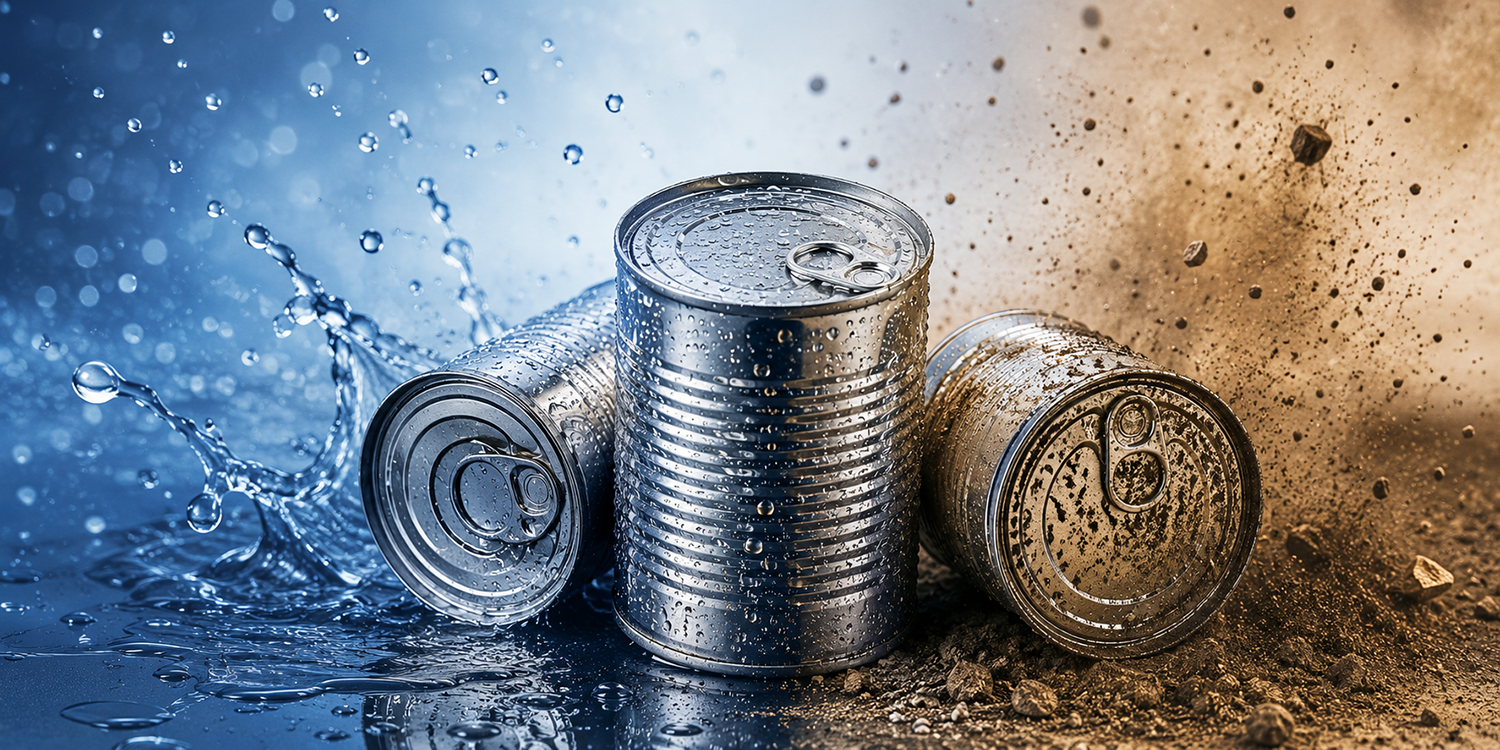
Food safety is one of the most important concerns in the modern food industry. Packaging plays a critical role in preserving product quality, freshness, and nutritional value. Tin cans have long been recognized as one of the most reliable packaging solutions due to their exceptional barrier properties. Designed to protect food from external elements, tin cans help prevent moisture intrusion, contamination, and spoilage, ensuring products remain safe and fresh throughout their shelf life.

1. Superior Protection Against Moisture

Moisture is one of the leading causes of food deterioration, affecting texture, flavor, and product stability. Tin cans provide a completely sealed environment that prevents water vapor from entering or leaving the container. This airtight barrier helps maintain the original quality of food products while extending shelf life. Whether used for fruits, vegetables, dairy products, or ready-to-eat meals, tin cans offer reliable moisture protection during storage and transportation.

2. Effective Barrier Against Contaminants

Tin cans are specifically engineered to safeguard food from contaminants such as dust, bacteria, microorganisms, and environmental pollutants. The sealed metal structure minimizes the risk of external contamination, helping manufacturers maintain high food safety standards. Advanced sealing technologies further enhance protection, ensuring that food remains hygienic from production to consumption.

arvindcans, arvind cans, www.arvindcans.com, arvind cans limited, arvind-cans, arvind-cans-limited, recycling tin cans, tinplate scrap recycling, tinplate waste management, tinplate packaging recycling, tinplate multi-recycling, tinplate sustainability, tinplate recycling benefits, how to recycle tinplate, tinplate recycling process, tinplate recycling

3. Preserving Freshness and Nutritional Value

One of the key advantages of tin can packaging is its ability to preserve freshness and nutritional content. By preventing exposure to air, moisture, and light, tin cans help retain essential vitamins, minerals, taste, and aroma. This makes them an ideal packaging choice for processed foods, canned fruits, vegetables, soups, and beverages that require long-term preservation without compromising quality.

4. Durable Packaging for Safe Transportation

Tin cans are highly durable and resistant to physical damage during handling, storage, and transportation. Unlike some packaging materials that can tear, puncture, or crack, metal cans provide strong protection against external impacts. This durability reduces the chances of contamination caused by damaged packaging while ensuring products reach consumers in optimal condition.

Conclusion

Tin cans continue to be one of the most trusted packaging solutions for protecting food from moisture and contamination. Their airtight sealing, strong barrier properties, and durable construction help preserve freshness, maintain food safety, and extend product shelf life. As food manufacturers increasingly prioritize quality and consumer safety, tin can packaging remains a dependable and effective choice for modern food preservation and storage needs.

arvindcans, arvind cans, www.arvindcans.com, arvind cans limited, arvind-cans, arvind-cans-limited, tinplate recycling statistics, tinplate closed-loop recycling, tinplate circular economy, almost 100% recyclable tinplate, tinplate recyclability, tinplate recycling Germany rate, tinplate recycling technologies, tinplate reuse and recycling, tinplate environmental impact, tinplate vs steel recycling
Strong, Safe & Long-Lasting Tin Protection

6 Latest Innovations in Metal Packaging You Should Know

Contaminant Protection

The strong metal structure of tin cans acts as a shield against dust, bacteria, microorganisms, and pollutants. This protective barrier helps maintain food hygiene and safety standards, ensuring products reach consumers in their original condition.

Moisture-Resistant Sealing

Tin cans are designed with advanced airtight sealing technology that prevents moisture from entering the package. This protective barrier helps maintain the texture, flavor, and freshness of food products while reducing the risk of spoilage.

Extended Shelf Life Preservation

Tin cans effectively block oxygen, moisture, and light, which are major causes of food deterioration. By minimizing exposure to these external elements, canned products retain their quality, nutritional value, taste, and aroma for extended periods.

Food-Grade Protective Linings

Modern tin cans feature advanced food-grade coatings and internal linings that prevent direct contact between food and metal surfaces. These protective layers help avoid corrosion, preserve product integrity, and maintain the original flavor and quality.

Packaging for Safe Handling

Tin cans offer exceptional strength and durability, protecting food products during transportation and storage. Their robust construction minimizes the risk of punctures, leaks, and package failure, ensuring food remains secure and uncontaminated.

Tamper-Evident Packaging

Modern tin can packaging incorporates secure sealing and tamper-evident features that provide an additional layer of protection. These technologies help detect unauthorized access, enhance authenticity, and build confidence in food safety and quality.
Esteemed

Our Clients

arvindcans, arvind cans, www.arvindcans.com, arvind cans limited, arvind-cans, arvind-cans-limited, tinplate recycling industry, tinplate recycling best practices, tinplate recycling process steps, tinplate recycling and CO2 reduction, tinplate resource efficiency, reduce waste with tinplate, tinplate recycling solutions, tinplate recycling challenges, tinplate recycling facts, recycling tinplate consumer tips
arvindcans, arvind cans, www.arvindcans.com, arvind cans limited, arvind-cans, arvind-cans-limited, tinplate recycling awareness, tinplate recycling tips, tinplate recycling blog, tinplate disposal guidelines, tinplate collection for recycling, tinplate recycling infrastructure, industrial tinplate recycling, tinplate recycling infrastructure, industrial tinplate recycling, commercial tinplate recycling, DWR tinplate recycling Germany, tinplate recycling systems
arvindcans, arvind cans, www.arvindcans.com, arvind cans limited, arvind-cans, arvind-cans-limited, tinplate recycling innovations, tinplate recycling companies, academic tinplate recycling, tinplate recycling research, tinplate recycling facts Germany, tinplate recycling case study, tinplate recycling benefits infographic, recycling tinplate packaging steel, tinplate end-of-life recycling, how tinplate is recycled
arvindcans, arvind cans, www.arvindcans.com, arvind cans limited, arvind-cans, arvind-cans-limited, tinplate recycling tips for households, tinplate recycling awareness campaign, tinplate recycling for consumers, tinplate recycling for manufacturers, tinplate recycling environmental benefits, tinplate recycling energy savings, tinplate recycling materials, tinplate recycling efforts, tinplate recycling and sustainability, future of tinplate recycling
arvindcans, arvind cans, www.arvindcans.com, arvind cans limited, arvind-cans, arvind-cans-limited, tinplate industry recycling, tinplate recycling certification, tinplate recycling standards, tinplate recycling regulation, tinplate recycling policy, tinplate recycling equipment, tinplate tin separation process, tinplate recycling infographic, tinplate recycling tutorial
arvindcans, arvind cans, www.arvindcans.com, arvind cans limited, arvind-cans, arvind-cans-limited, tinplate recycling marketing, tinplate recycling SEO, tinplate recycling blog post, tinplate recycling FAQs, tinplate recycling facts vs fiction, tinplate recycling myths, tinplate CO₂ footprint, tinplate recycling versus plastic, tinplate packaging sustainability
arvindcans, arvind cans, www.arvindcans.com, arvind cans limited, arvind-cans, arvind-cans-limited, tinplate recycling energy savings, tinplate life cycle analysis, tinplate recycling for zero waste, tinplate scrap value, tinplate reprocessing, tinplate recycling for circular economy
arvindcans, arvind cans, www.arvindcans.com, arvind cans limited, arvind-cans, arvind-cans-limited, tinplate recycling in manufacturing, tinplate recycling integration, tinplate recycling in wind turbines, tinplate recycling in automotive, tinplate recycling in packaging, tinplate recycling cost savings
arvindcans, arvind cans, www.arvindcans.com, arvind cans limited, arvind-cans, arvind-cans-limited, tinplate recycling in EU, tinplate recycling benefits long-term, tinplate recycling end-of-life products
arvindcans, arvind cans, www.arvindcans.com, arvind cans limited, arvind-cans, arvind-cans-limited, tinplate recycling industry trends, tinplate recycling percentage, tinplate recycling statistics Germany
arvindcans, arvind cans, www.arvindcans.com, arvind cans limited, arvind-cans, arvind-cans-limited, tinplate recycling blog ideas, tinplate recycling no downcycling, tinplate recycling high quality, tinplate recycling multi-cycle
arvindcans, arvind cans, www.arvindcans.com, arvind cans limited, arvind-cans, arvind-cans-limited arvindcans, arvind cans, www.arvindcans.com, arvind cans limited, arvind-cans, arvind-cans-limited